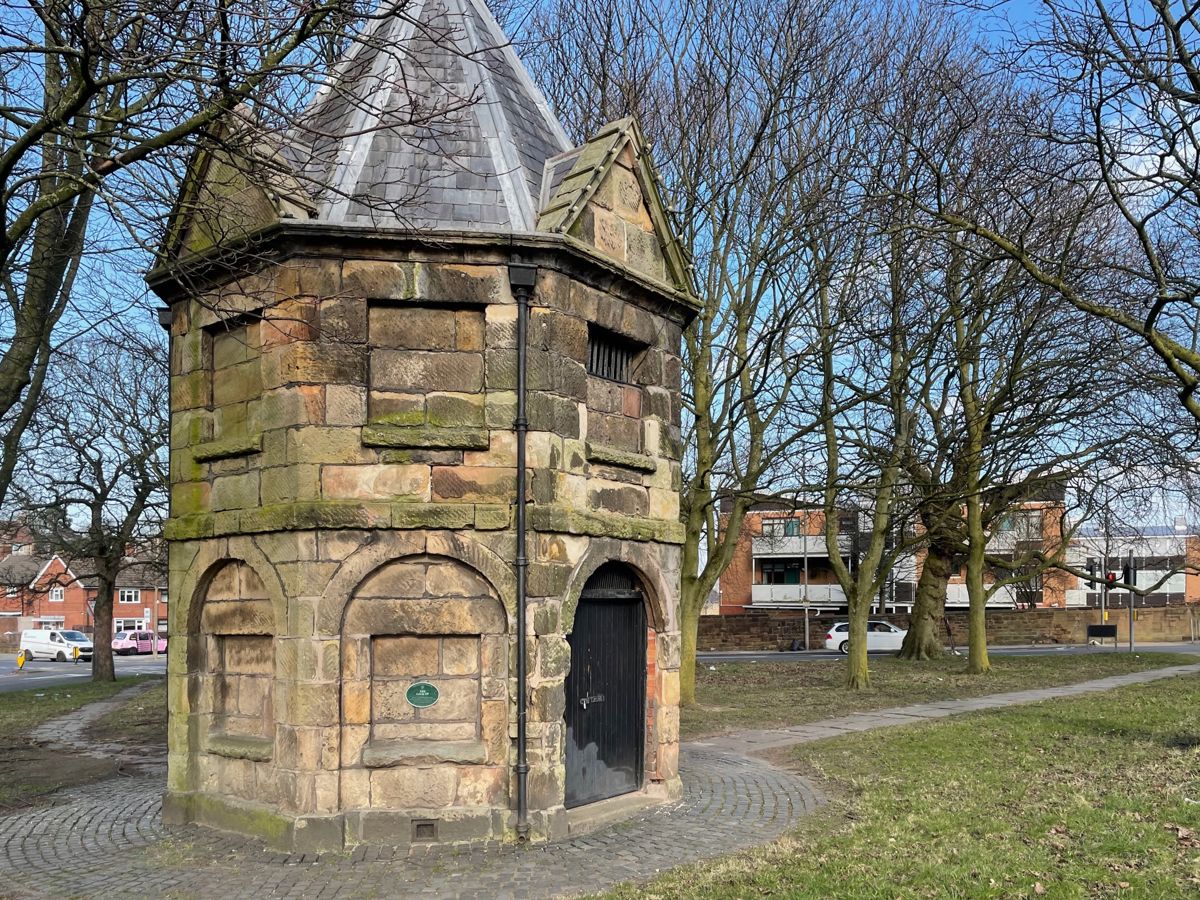
A hidden gem smack bang in the middle of Wavertree Green, this octagonal building has a fascinating history.
Once upon a time, before there was an official police force, and before there were police stations and holding cells, crime was dealt with by the local constable. If someone had one too many in the local hostelry and caused trouble, they would end up being held in the constable’s house overnight. Maybe the constable would chaperone them in the accused’s own home. The role of constable rotated amongst the parishioners, so you never knew when your turn would suddenly get serious!
The parish gracefully reimbursed any expenses occurring from this, at a rate of 2 shillings per prisoner per night. But a solution was sought to save the parish and the constable the inconvenience and cost.
Construction of the lock-up
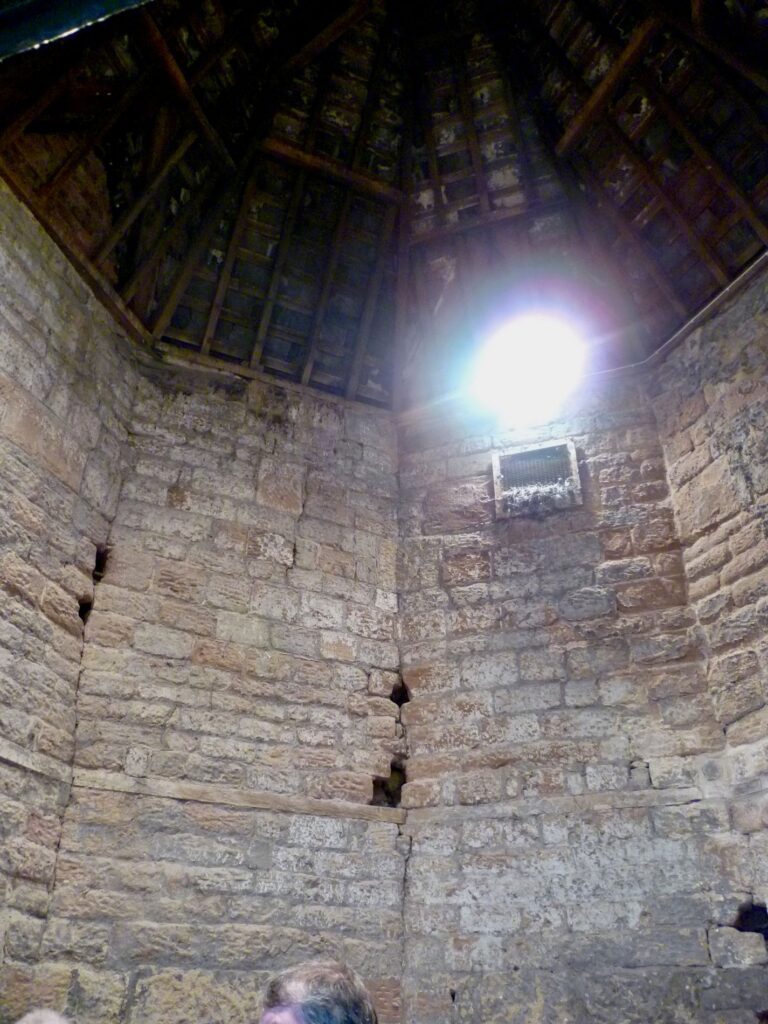
Wavertree Lock-up was the answer, being built in 1796 and similar to other buildings across Britain. Petty criminals could be left in the building to cool down overnight, rather than housed. It was also used to isolate cholera patients and house recent migrants from Ireland, who would have found their way to Liverpool and Wavertree looking for work and homes.
There were rumours that prisoners’ accomplices hid behind the parapet until nightfall, when they would (somehow) release the person held within. These rumours are unsubstantiated. Another rumour comes from a 1796 guide which claims there was a ‘monastic-looking house’ nearby. Whether this is real, or based on the nearby presence of the Monks’ Well, is open to debate.
It was a substantial building for its use and small size, but it was built with such consideration for quality that, when the building of Wavertree Police Station made it obsolete, a campaign was launched for its preservation.
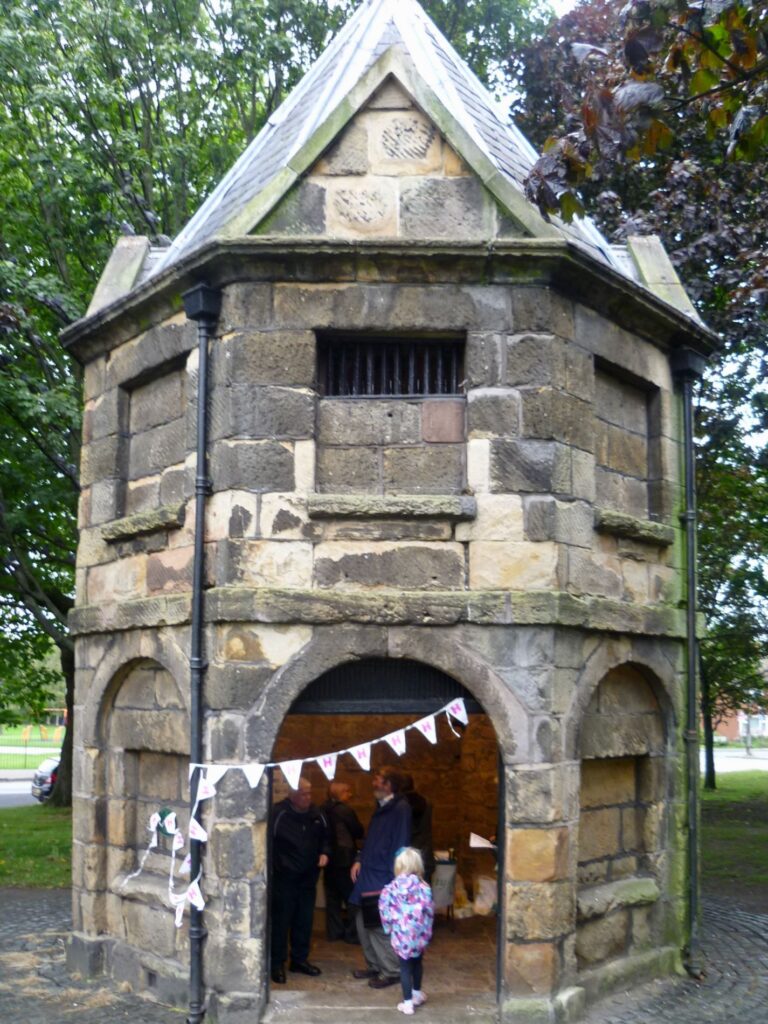
J.A. Picton, a Liverpool-born, Wavertree-resident architect and pioneer of the building conservation movement headed the scheme. He chaired the committee which considered its demolition and, in the end, it was saved. Picton beautified the Lock-up with a conical roof in 1869 (the original having been much flatter, as old images demonstrate). A Mr Myers of the nearby Lake House objected to the Lock-up, but his concerns seem not to have had any effect.
Wavertree Lock-up in the modern world
For many years the lock-up remained, indeed, locked up. It was used by council workers to store tools used in local maintenance jobs.
More recently it has been opened to the public on certain dates like Heritage Open Days and, along with other local monuments like the Picton Clock and the Monks’ Well, have established themselves in the public consciousness as vital parts of the character of the Wavertree landscape.
Further listening
Locked up in Wavertree: Liverpool’s mini jail, BBC Radio Merseyside, retrieved 25th Jul 2026. I was interviewed about the lock-up for Radio Merseyside’s great Hidden Merseyside series. The above article is based on the notes I made before that interview.